
.png)

.png)
Deals you commit at quarter-start slip or disappear, and the number lands somewhere else. Nobody can say which deals are real, so the forecast is something you argue about instead of count on.
.png)
Opportunities sit in one stage for weeks, then go quiet. Your CRM shows progress the deal never made, so a stuck deal looks alive until the day it dies.
.png)
Your best reps navigate on instinct and win. The rest follow the same stages and do not, and the process cannot tell you why.
.avif)
The stages in CRM have names, so it looks like a process. But nobody designed them around how your best customers decide, so a committed deal is a hopeful guess and the forecast is a number nobody fully believes.

And 81% of buyers end up dissatisfied with the provider they chose. The obstacle is rarely the competitor. It is a buyer who cannot build the internal case to move, and a process that never helped them build it.
Your process grew over years of inherited habits and CRM defaults, never designed around your best customers. It fits the average deal and misses the ones that matter most, because no part of it was built for how your most promising buyers decide.
Stages with names in a CRM feel like a process, so it is easy to assume you have one. When those stages track what your sellers do rather than what the buyer has decided, the pipeline measures activity and tells you nothing about whether a deal will close.
With no evidence required to advance, deals move when the rep working them feels good about them. A committed deal is really a hopeful guess, and the forecast is a number nobody fully believes.
Strong sellers navigate by instinct and win. The process carries none of that for everyone else, so results depend on which rep is working the deal.

We check two things, how often your committed deals actually close, and how long your real wins take from first meeting to signature. The first tells you whether your forecast is real or a guess; the second exposes the deals that are stuck rather than merely slow.

We redesign the stages around the buyer's decisions, set the evidence each one needs to advance, and build the business case and qualification rules into the deal early, with the buyer. The CRM mirrors the proof, so the forecast rests on substance.

Your team runs the process and owns it. Every opportunity advances on documented evidence of buyer movement, and disqualifying early counts as a win.

A structured way to establish fit and quantify value early, built on your domain expertise: the problem, why it matters now, what doing nothing costs, and who owns the decision. Fit and the value case are settled before solutioning begins.
The handful of principles that actually create buyer value and movement, written down, each with a short enablement guide so every seller can run them the way your best people already do by instinct.
Stages defined by the decisions the buyer makes, with exit criteria that are evidence the buyer moved. Each principle gets a place in your CRM data model, so the process shows up in the deals rather than in a binder.
A one-page quantified case, with impact, cost of inaction, success criteria, and decision ownership, built early with the buyer. It is strong enough to travel inside the buying group and drive agreement when you are not in the room.
Your ideal-customer profile enforced on every live deal, with disqualifying early counted as a win, so your team spends its time where it can actually close.
Reviews that ask what the buyer has actually decided rather than what the rep hopes. Opinion battles give way to evidence, and a stuck deal can no longer hide as a live one.
The 2-minute diagnostic maps your company against all twelve sprints and shows where the Sales Process Sprint fits in your priorities.
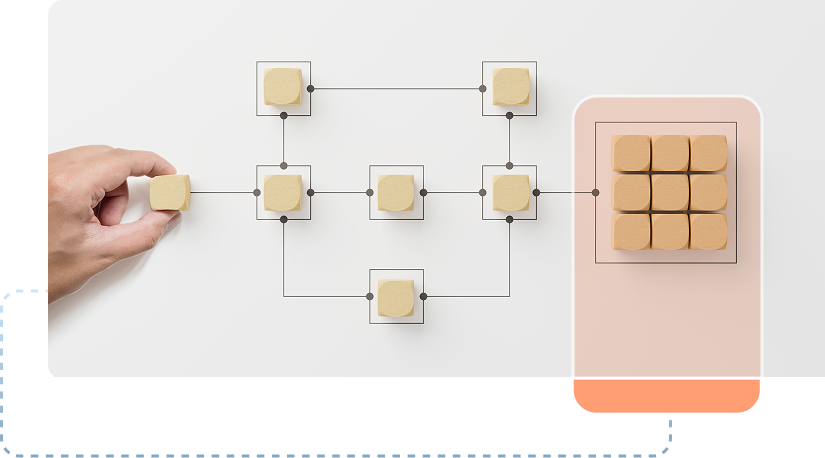
Most B2B purchases stall, and most buyers end up dissatisfied with the supplier they choose, because the obstacle is rarely a competitor. It is a buyer who cannot build the internal case to act (Forrester, 16,000+ buyers). Sales processes designed around how the buyer decides convert at 41 to 46%, against 8 to 27% for processes that merely grew over time, with the same sellers (CSO Insights).
the conversion when the process is designed around the buyer's journey, 41 to 46% against 8 to 27% for the rest, with the same sellers (CSO Insights).
faster revenue growth at companies with a formal, deliberately designed sales process, and the gains grow with discipline.
buyers insist on a formal business case for a significant investment. A deal that reaches the end without one has nothing left to compete on but price.
Post-Sale Potential turns your won accounts into a predictable source of expansion, run on the same evidence-based discipline.

Commercial Operating Discipline is the operating system that holds every gain from Sprints 1 through 11 in place. Without it, the new process, sharper qualification, and forecast credibility quietly slide back to where they started.
The next step is a 30-minute conversation where we assess whether Sales Process is the right starting point for your business.


.svg)